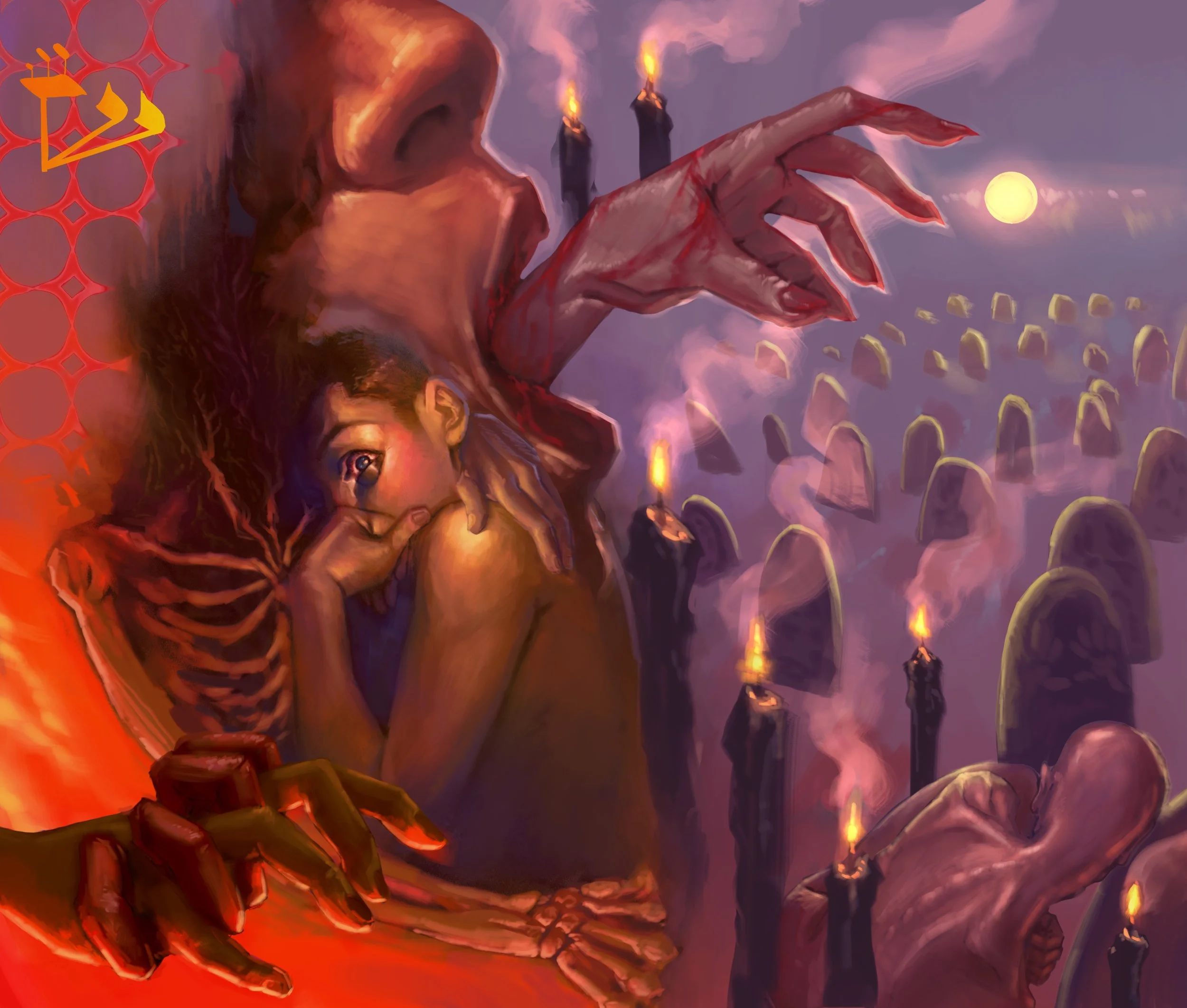
This painting uses the idea of a dybbuk as a framework for thinking about possession as a metaphor for abuse, unfolding as a loose sequential image rather than a single moment.
The composition moves through a progression: possession, exorcism, and aftermath, layered within the same space. A central figure appears caught in intense fear, held by a faceless skeletal presence, suggesting control without identity. In the foreground, fiery hands close in, adding pressure and urgency to the scene.
Behind them, a graveyard anchors the environment, with the figure eventually shown collapsed across a headstone. In another layer, a hand emerging from a mouth hints at the act of expulsion, disrupting the body from within and marking the shift toward release.